He Tried Being the Nice Guy: Why Dr. Marvin Rapaport Is Still Angry About Topical Steroid Withdrawal
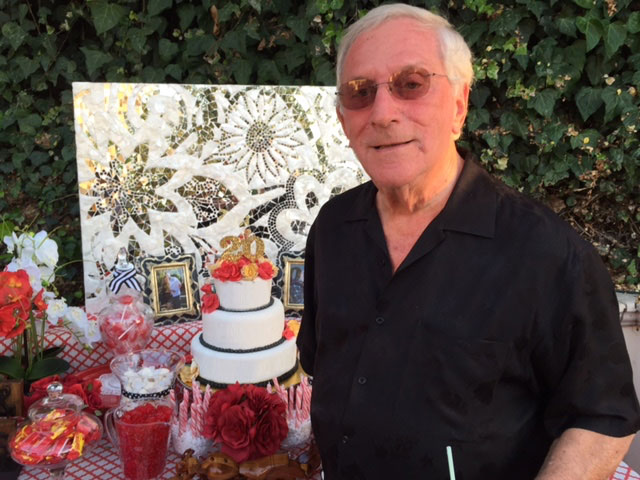
Photo courtesy of Dr. Marvin Rapaport / Red Skin Syndrome
More than forty years after Dr. Marvin Rapaport began treating what he calls topical steroid addiction (TSA) or red skin syndrome (RSS), topical steroid withdrawal (TSW) is finally becoming harder for medicine to ignore… at least, in some ways.
Rapaport has published several papers on what he calls topical steroid addiction. Now there is newer research, proposed diagnostic criteria, patient organizations, conferences, and a dedicated ICD-10-CM code expected to be implemented in the United States in 2027.
From the outside, this looks like major progress. And in some ways, it absolutely is.
But progress can look a bit strange, and even questionable, when you have been around long enough to remember what it was like before.
I’ve been living with and around topical steroid withdrawal for over twelve years now. That’s long enough to watch awareness grow enormously. Long enough to watch the language itself around it change…many times.
I’ve been around long enough to watch the new research emerge, organizations and communities expand, treatments enter conversation, and eventually, an ICD diagnosis code.
I’ve also been around long enough to see more and more people suffering and asking the same questions.
How do I know if this is what is happening to me?
How do I find a doctor who can help me?
How can I even trust doctors again?
Am I doing the right thing?
What am I supposed to do now?
Rapaport has been hearing versions of those questions for more than forty years. So when I reached out to talk to him and he agreed, I expected strong opinions. And if I’m honest, I was a bit nervous.
But within the first few minutes, the conversation became much warmer and friendlier than I expected. And it quickly revealed the difference between recognition and help. It was the same difference I had recently been trying to put words to in my own piece about the ICD code.
“Where does a code treat patients?” he asked me.
That is still the question I keep coming back to.
Before the Interview, He Was Part of My Survival Story
Before I ever got a chance to talk to Rapaport myself, I knew his voice from a screen. For over a decade, it was a familiar and hopeful voice to me.
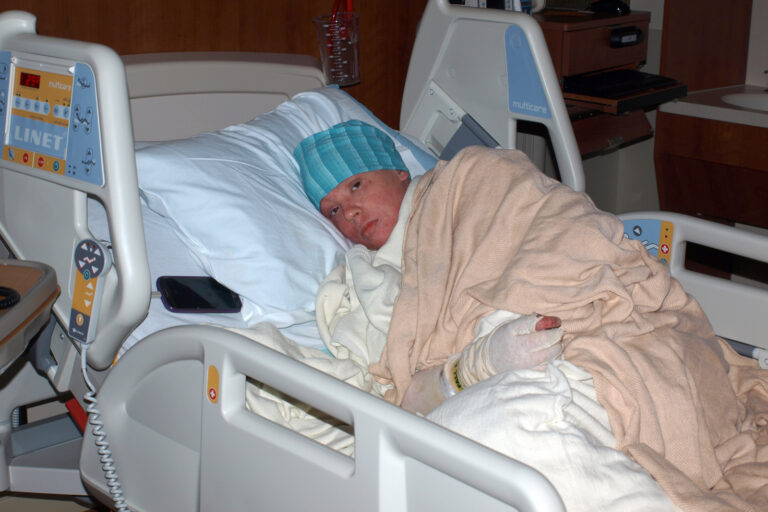
In 2014, my dad found one of his YouTube videos when I was severely ill in my early twenties and the doctors treating me did not have an answer for what was happening. I could no longer recognize myself. I spent 14 years being treated with topical and oral steroids, along with other medications. By then, I had lost nearly all hope. I had already been through three longer psychiatric inpatient stays. I was ready to give up on life.
When I watched Rapaport’s video, a lightbulb went on in my head. Not only that, but hope returned. Hope that there was even a slight possibility that I could have a life again.
I watched that video over and over again—probably fifty times, if not more.
I watched because he looked at something that felt completely incomprehensible and spoke about it with complete confidence.
His message was simple: he knew what this was, he had seen it before, and people got better. But he was also honest that it was extremely painful and that patients went through hell.
When your whole world has become about surviving another hour, or even one minute, you hold onto words like that with everything you have.
I stopped using steroids immediately. And I was not prepared for what followed at all. What followed consumed years, more than a decade, of my life. I reached a point where I could no longer imagine my body ever becoming mine again.
So when I finally spoke to Rapaport twelve years later, I wasn’t speaking to some random dermatologist.
I was speaking to one of the people whose work had given me hope when I had none left.
Recognition Is Not Care
The new ICD code should, theoretically, feel like a victory. For some people, it does. Or at the very least, it feels like a meaningful step toward recognition.
Rapaport does not talk about it that way.
He wants to know what a code actually changes if the doctors seeing these patients still do not know how to recognize or treat the condition. And frankly, that’s the question I’ve been asking as well.
“If I’ve cured 15,000 people,” he told me, “what more has to be done other than following the protocols that I use?”
And then again: “Where does a code treat patients?”
I understand exactly why he said that. I had recently written about the same problem from my own side of it.
A code matters. I’m not trying to dismiss that. It gives this experience a place and language inside the medical system. It allows something to be counted after patients have spent years trying to explain what was happening to them. And people worked very hard to get to this point.
But the important part for me is that a code does not equal patient care. And I’m afraid the way it has been framed might give suffering patients false hope. That worries me.
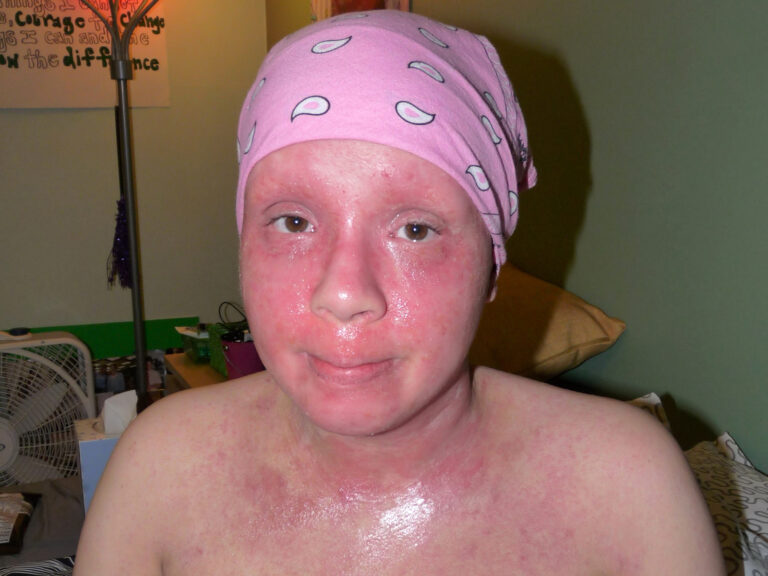
A code cannot teach a doctor how to recognize something they were never taught to even look for. It cannot sit beside a patient whose skin is burning so badly they don’t want to be alive anymore. It cannot tell a terrified person how long this will last or what they are supposed to do in the meantime.
It also doesn’t give anyone back the years already lost while the medical system was debating whether this was even real enough to have a name.
Withdrawal or Addiction?
One of Rapaport’s deepest disagreements with the current TSW conversation is about the name itself.
He does not primarily call the condition topical steroid withdrawal. He calls it topical steroid addiction.
“There is no such diagnosis as TSW,” he told me. “It’s called TSA.”
To him, that is not a small distinction. Withdrawal describes what happens after the drug is removed. Addiction describes what he believes happened to the body through chronic exposure in the first place. In his view, taking addiction out of the name changes the way the condition is understood and treated.
This is one of the places where his framework and the broader conversation now seem to part ways.
I am not sure that disagreement can be settled by simply choosing the newer language and moving on. What does it mean for medicine to begin recognizing the phenomenon while changing the language used by one of the people who spent decades trying to describe it?
What Counts as Knowing?
Rapaport has very little patience for some of the newer research, especially work trying to establish biological differences between TSW and eczema.
“We showed it,” he said. “We wrote the papers 30 years ago.”
To him, this was already clear in the histories and bodies of thousands of patients. The same patterns kept repeating. The symptoms looked different. And he watched people get better.
I understand why that is frustrating. I also understand why research still matters.
But I keep coming back to the same question.
What counts as knowing in medicine? How many patients have to describe the same thing before their experiences become real and before they matter? How many doctors have to see the same pattern? And what happens to the people who are suffering while medicine waits for a biomarker, a mechanism, or a set of diagnostic criteria?
Clinical observation is not infallible. Obviously. Medicine has been wrong before.
But medicine has also been wrong by refusing to believe what patients and doctors were seeing until it could be proven in exactly the right language.
People live in the space between those two things.
I did. For over a decade. And I still am.
Maybe It Was Time to Stop Being the Nice Guy
At one point during our conversation, Rapaport said, “Maybe it’s time to stop being the nice guy.”
Sometimes, he told me, he tries being “soft and gentle.”
“I’ll be acquiescent. I’ll be quiet. I’ll be gentle.”
Then: “I’ll get angry as hell.”
He knows how that anger is received. He described people reacting as though he were just some “nasty bastard” yelling at everyone.
I have heard versions of that criticism myself. That Rapaport has become too angry. Too “crazy.” Too extreme. That he has lost patience.
Apparently, he expected some version of that from me too.
“When you wrote,” he told me, “I thought I was going to have a fistfight with you.”
I was not calling to fight him at all. I was trying to understand what he thought.
But the fact that he expected a fight before we had even spoken says a lot about the response he gets from others.
I cannot speak for every interaction someone else has had with him. I can only speak to the person I spoke with, and to what I have watched for twelve years.
He said a lot about pharmaceutical money, doctors, researchers, patient organizations, ego and motive. Some people will hear that and dismiss him. I didn’t. After twelve years inside this world, I do not think his suspicion comes from nowhere. I share more of it than I don’t.
But the anger itself… doesn’t surprise me or seem strange at all.
I have watched this for twelve years. Twelve is nowhere near forty, but it is long enough to watch people lose enormous parts of their lives. Long enough to watch desperate patients cycle through doctors, treatments and protocols. Long enough to watch people spend money they do not have, just like I did.
Long enough to see recognition increase while the practical question stays exactly the same:
Who can actually help me? Who can actually help us?
So when Rapaport told me maybe it was time to stop being the nice guy, I wasn’t really all that shocked.
Mostly, I recognized it.
The Difference Between Us
At one point, I told him something personal I have had to learn the hard way:
I still want to do my part to raise awareness and help, but I also want to live my life.
For a while, TSW became so much of my identity that I had to step away from the community entirely. I needed days that were not about skin. I needed to write about other things. I needed relationships, ordinary life, laughter, marriage, work, creativity.
I needed to remember that I was a person before I was a patient or an advocate.
Rapaport understood immediately.
“You have to back off,” he told me.
Maybe that is one of the differences between us. Because I eventually had to step away. Rapaport never really did.
And that made me want to ask him the question I most wanted him to answer…
How?
How do you keep doing this for more than forty years? How do you keep watching people suffer and not being able to help them all? How many times can you repeat yourself while so much of the medical world keeps disagreeing with you, or simply does not listen?
What Was Underneath the Anger
His answer was not really about being proven right.
“All I need is one more patient to get better,” he said.
One patient can make him feel good “for that day, for that week, for that month.”
Then he talked about the messages he receives from people who are still suffering. Tens of thousands of emails over the years.
“I cry for them.”
Later, when he talked about not knowing how to reach everyone who was still suffering, he said:
“But I don’t have any answers. So I went back into my little room, covered myself in a blanket, and I just take care of one person at a time. I feel good because they get better. I do good.”
That stayed with me more than almost anything else he said. I wasn’t surprised, but hearing him say it made it harder to reduce him to the “angry doctor” everyone argues about.
The same man who gets “angry as hell” also cries over emails from strangers asking him for help.
Those things do not cancel each other out. They go hand in hand.
And I know something about that too.
Not from forty years of watching it. But twelve years of living inside it.
What Are You Going to Do?
Toward the end of our conversation, Rapaport returned to the question of what either of us can actually do.
He cannot knock on the door of every dermatologist in America. I cannot write one article that changes an entire medical system, no matter how much I sometimes wish I could. Neither of us can give people back the years they have already lost.
“Just keep doing it,” he told me. “Try your best. What are you going to do?”
I think that is what he has done. He has kept going.
For more than forty years, he has continued treating the person in front of him, while fighting a much larger system that still does not seem to know what to do with these patients.
I can see why some people think he has become too angry or extreme. But I disagree. I think his anger is completely justified.
That does not mean he has to be right about absolutely everything. There are still many things none of us understand about TSW. You do not have to agree with him on everything. I don’t.
But angry or not, he deserves respect.
Without him, TSW may not have been revealed when it was. Many of us may not have known what was happening to us when we did, or had the chance to begin healing at all.
Speaking for myself, I’m pretty sure I would not be alive today writing this.