The Body Is Real. The Inner Life Is Real.
Why healing must make room for medicine, meaning, and the whole person.
I grew up in Sarajevo. There is a place in that city known as where East meets West. Stand facing one direction and you see Ottoman influence. Turn the other way and it becomes Austro-Hungarian. The change is visibly immediate.
I knew of this place the way you know a fact about your own city. Its meaning did not come to me as a child. It came back to me recently, while my husband and I were drawing out this philosophy on a poster board, and the image returned on its own.
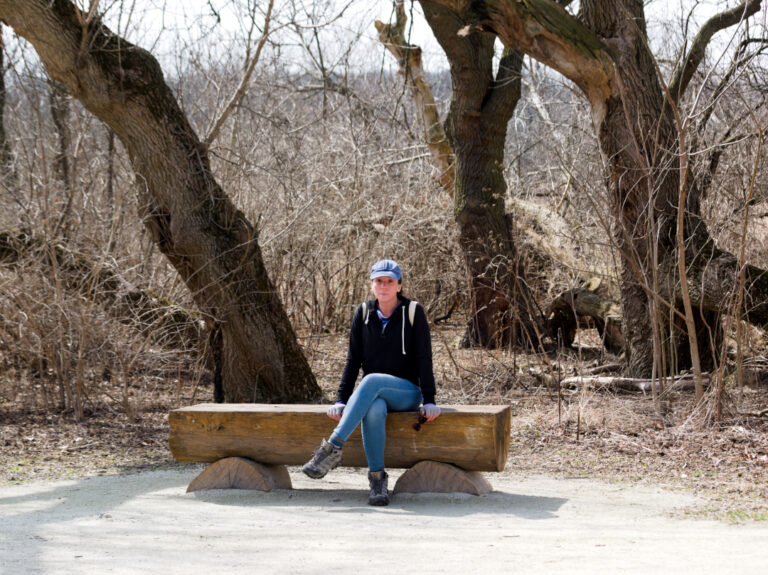
For years, I lived a version of that meeting point in my own body.
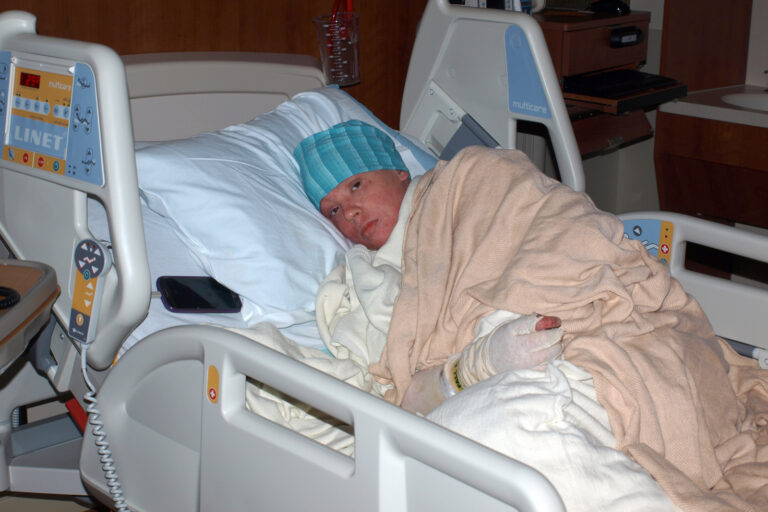
The medicine I encountered looked at me and saw a skin condition. Eczema to suppress. More creams. More steroids. Some of what was happening to me could be documented. What could not fit inside the familiar eczema framework, the spread, the burning, the nervous-system symptoms, the loss of function, my own testimony about what withdrawal was doing to me, was not adequately held or named. The system kept working to manage the symptoms it recognized. In the process, I disappeared. Not the illness. Me.
So I went looking elsewhere, into frameworks that spoke a different language. Illness as suppressed emotion. As unprocessed trauma. As a message from an energy not yet balanced, a belief not yet changed. For a while, this gave me something medicine never had: meaning.
But it came with its own cost. If my body was still sick, the logic went, there must still be something unhealed in me. The burden of a prolonged physical collapse quietly became mine to carry again, wearing a different name.
In medicine, worsening symptoms were repeatedly treated as evidence that the original eczema needed more suppression. In spiritual spaces, continued illness could become evidence that I still had emotional work left to do. Each system could use my ongoing suffering to confirm its own explanation.
Two systems. Each could see something real. Each mistook its part for the whole.
Here is what I now believe, plainly:
The body is real. The inner life is real. Healing must make room for both.
Both are real. Neither gets to explain the other away or claim the whole person.
This is what Healing the Layers actually is. Not a new modality. Not a replacement for medicine, or for the inner work. A bridge.
The physical and the inner life are distinct. They are not the same territory, and collapsing them into one does damage in both directions. But distinct is not the same as separate. They are relational. My inner life shaped how the illness was experienced and carried. It did not create the illness itself. Influence is not causation. Changes in my body did not automatically heal every fracture the illness left in my identity, relationships, and sense of safety.
The bridge does not collapse everything outside the body into one vague inner realm. Mind, emotion, relationship, meaning, spirit, identity, and self are distinct dimensions too. They interact, but no one layer gets to explain the whole person.
The bridge is not crossed once, in a straight line. Healing moves through recurring regions:
Unraveling, when a belief, identity, pattern, or way of understanding life begins to fall apart.
Survival, when getting through is enough.
Awareness, when you begin to observe what is happening rather than only endure it.
Expansion, when curiosity and possibility return.
Integration, when what you have learned begins to enter how you live.
Homecoming, when you feel more like yourself. Not a new self. A truer one.
They are not steps you graduate through. They are recurring regions of liminal space. You may revisit them, inhabit more than one, or move through them in no fixed order. A map does not shame you for where you are standing.
For a patient, this means being able to say both things are true: the burning in my skin and the grief the illness carried into my life, without having to prove that one caused the other to be believed.
For a practitioner, it means treating and investigating the body without reducing the person to it, while making room for meaning without turning meaning into diagnosis or cause.
For a system, it means care that can track symptoms, function, and biological harm while also making room for grief, identity, relationship, and meaning, not as competing diagnoses, but as parts of the same human life.
I think of that place in Sarajevo differently now. Not only as a landmark, but as an image of two ways of seeing the world meeting in one place without becoming the same.
That is what I have been building, however slowly. Not a compromise between medicine and meaning.
A bridge wide enough to hold both at once.